Blog
The New $6,000 Senior Deduction: How Couples Over 65 Can Withdraw $47,500 from a 401(k) Tax-Free in 2026

The New $6,000 Senior Deduction: How Couples Over 65 Can Withdraw $47,500 from a 401(k) Tax-Free in 2026
A married couple over age 65 can now withdraw $47,500 from a traditional 401(k) in 2026 and owe zero federal income tax, thanks to a temporary new deduction created by the One Big Beautiful Bill Act. The provision, available for tax years 2025 through 2028, adds $6,000 per qualifying person ($12,000 for a couple) on top of the existing senior benefits.Irs
According to a recent analysis, three deductions stack perfectly for a married couple filing jointly with no other income: the 2026 standard deduction of $32,200, the longstanding additional standard deduction of $1,650 per spouse ($3,300 total), and the new $12,000 senior deduction. The total of $47,500 exactly offsets a $47,500 retirement account withdrawal, producing taxable income of zero.Yahoo Finance
How the New Deduction Works
The enhanced senior deduction is available whether you take the standard deduction or itemize. You must be 65 or older by the end of the tax year, file a joint return if married, and include a valid Social Security number on the return. It phases out by 6% of modified adjusted gross income above $150,000 for joint filers (and $75,000 for single filers), disappearing completely at $250,000 and $175,000 respectively.Rklcpa
Importantly, this is separate from the existing additional standard deduction for seniors, which continues to apply. For 2026, that older provision adds $1,650 per spouse on a joint return. The two benefits stack, giving eligible couples substantially more shelter than in prior years.
Practical Planning Implications
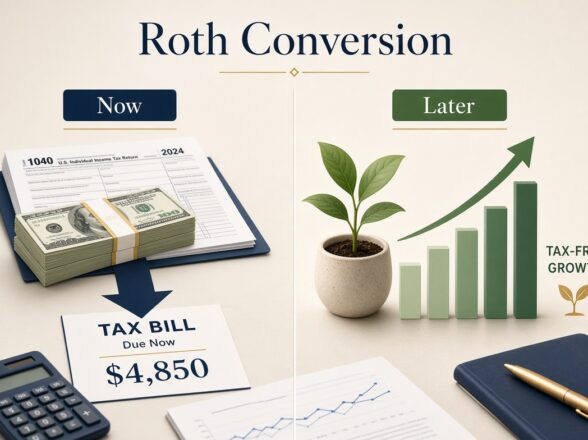
The zero-tax scenario works best when the couple has little or no other taxable income. Once Social Security begins, the picture changes. Up to 85% of benefits can become taxable once provisional income exceeds certain thresholds, and the new deduction does not reduce the amount of Social Security that is included in taxable income. A large Roth conversion or other income spike can also trigger the phase-out and reduce or eliminate the $12,000 benefit.Fidelity
For many retirees still in the early years of retirement—before Social Security or required minimum distributions begin—the window from 2025 through 2028 offers a meaningful opportunity to draw down pretax balances at a lower tax cost. Single filers receive a smaller but still valuable boost: up to $6,000 plus the existing age-based addition.
What to Watch
The deduction is temporary and is currently scheduled to expire after the 2028 tax year. It also requires careful tracking of modified adjusted gross income, especially for those with capital gains, Roth conversions, or part-time work. Married couples who file separately lose the deduction entirely.
Retirees should review their 2025 and 2026 tax projections with a tax professional, particularly if they are considering larger withdrawals or conversions before the provision ends. While the $47,500 tax-free example is striking, the real value depends on each household’s overall income mix and timing.